Source Indoor IP65 LED Display Panel for Stage, Ads, and Retail
Find 30 indoor IP65 LED display panel options for stage performances, advertising, and shopping guides. Compare models like P1.5, P3, and P6 with varying pixel pitches, scanning modes, and certifications to select the right video display solution for your project needs.
Key considerations
Products List


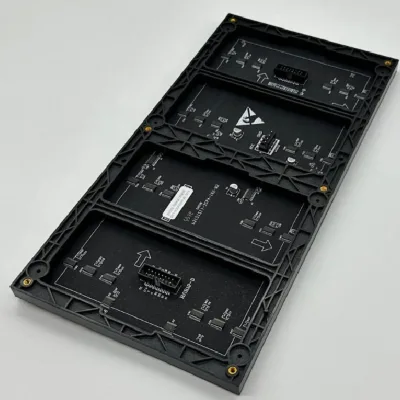


Comprehensive Sourcing Guide
Indoor IP65 LED Display Panel Sourcing Guide
Procuring indoor LED video displays requires distinguishing between standard commercial units and specialized panels designed for harsher environments. While the observed product data highlights models like P1.5, P3, and P6 with varying pixel pitches, buyers must verify if specific units truly meet IP65 ingress protection ratings for indoor use, as many listed items focus on stage performance or advertising without explicit dust and water resistance claims. The distinction between simple cabinet designs and die-casting aluminum cases often dictates the structural integrity required for high-traffic venues or areas with potential moisture exposure.
Buyers should prioritize suppliers who explicitly confirm the IP rating for the specific model number rather than assuming all indoor panels share the same protection level. The observed data indicates a wide range of pixel configurations, from 1R,1G,1B setups to full-color systems, which directly impacts visual clarity in different lighting conditions. Understanding whether a panel is intended for a shopping guide, airport hall, or stage performance helps narrow the search to units with appropriate brightness levels and refresh rates, ensuring the selected display functions reliably in its intended application without visual artifacts.
Product Scope and Observed Listing Signals
The market for indoor LED displays presents a diverse array of specifications, with observed pixel pitches ranging from 1.5mm to 16mm, each serving distinct viewing distance requirements. Listings frequently mention applications such as stage performances, advertising, and shopping guides, yet the specific IP rating for indoor environments varies significantly across different product models. Buyers must carefully cross-reference the stated application with the physical construction details, such as the use of die-casting aluminum cases versus simple cabinets, to ensure the unit can withstand the environmental demands of the installation site.
Price observations in the current market span from 8 to 2972 USD, reflecting the vast differences in technology, pixel density, and build quality between entry-level and high-end video displays. This wide variance necessitates a clear definition of performance needs before engaging with suppliers, as a lower price point may correspond to a 1/4 scan mode with lower refresh rates, whereas premium models might offer 1/16 scan modes and higher brightness. Procurement teams should analyze the listed pixel configuration and scanning mode to determine if the visual output meets the specific requirements of the venue, avoiding the trap of selecting a unit based solely on cost without verifying its technical suitability.
Technical Specifications to Verify
When evaluating technical performance, the pixel pitch and scanning mode are critical determinants of image quality and viewing distance. The observed data includes models with 1.5mm, 3mm, 4mm, 6mm, and 16mm pitches, alongside scanning modes ranging from 1/4 to 1/16. A 1/16 scan mode typically offers superior brightness and refresh rates compared to a 1/4 scan, which is essential for capturing high-speed video content without flickering. Buyers must verify that the selected pixel pitch aligns with the intended viewing distance, as a 4mm pitch might be suitable for a 4-meter viewing range, while a 1.5mm pitch is required for close-proximity applications.
Electrical and operational parameters such as voltage, refresh rate, and driver IC type also demand rigorous verification to ensure system stability. The observed specifications include AC110-240V voltage ranges, refresh rates exceeding 1920Hz, and constant current driver ICs, which are vital for consistent color reproduction and longevity. Additionally, the system operating platform, often listed as Windows XP in older inventory, must be compatible with modern control software to prevent integration issues. Confirming the brightness level, such as 800 nits, and the contrast ratio ensures the display remains visible and vibrant under the specific ambient lighting conditions of the installation environment.
Compliance and Safety Documentation
Safety and regulatory compliance are non-negotiable for indoor LED installations, particularly when the equipment is deployed in public spaces like airports, shopping centers, or performance venues. The observed product listings frequently cite certifications such as CCC, CE, RoHS, and ETL, which indicate adherence to specific regional safety and environmental standards. Buyers must request valid, up-to-date certification documents for the exact model being purchased, as the presence of a certification on a general product page does not guarantee that every specific unit or batch meets the required safety thresholds for the target market.
Beyond electrical safety, environmental compliance regarding hazardous substances is crucial for sustainable procurement practices. The RoHS certification, often mentioned alongside CE and CCC, confirms that the LED panels are manufactured without restricted hazardous materials, aligning with global environmental regulations. Procurement teams should verify that the supplier provides a Declaration of Conformity that explicitly covers the specific product model and its components, including the LED lamps and power supply units. This documentation serves as a legal safeguard and ensures that the installed displays do not pose health risks to occupants or violate local environmental laws.
Cost Drivers and Commercial Terms
The total cost of ownership for indoor LED displays is influenced by several factors beyond the initial unit price, including the complexity of the pixel configuration and the durability of the cabinet construction. Models featuring die-casting aluminum cases and advanced constant current driving systems typically command higher prices due to superior heat dissipation and structural rigidity. Buyers should analyze the cost implications of different pixel pitches, as finer pitches like 1.5mm or 3mm involve more complex manufacturing processes and higher component costs compared to coarser 6mm or 16mm options.
Commercial terms such as Minimum Order Quantity (MOQ) and lead times also play a significant role in budgeting and project scheduling. The observed MOQ range spans from 1 to 1000 units, offering flexibility for small-scale projects while potentially requiring bulk commitments for large installations. Lead times, indicated by drive types ranging from 15 to 20 days, must be factored into the project timeline to avoid delays in deployment. Procurement teams should negotiate clear terms regarding payment schedules, shipping responsibilities, and warranty coverage to mitigate financial risks and ensure a smooth supply chain process.
Supplier Qualification and Quality Control
Selecting a qualified supplier requires a thorough assessment of their manufacturing capabilities and quality control protocols, particularly for specialized indoor LED products. The observed product origin is Shenzhen, China, a major hub for LED manufacturing, but buyers must verify the specific factory's capacity to produce units with the required IP ratings and pixel configurations. Requesting factory audit reports or third-party quality certifications can provide insight into the supplier's ability to maintain consistent product quality and adhere to strict production standards.
Quality control measures should extend beyond the final product inspection to include component-level verification, such as the source of LED lamps and the reliability of the power supply units. The observed data mentions specific components like Epistar LED lamps and MW power supplies, which are indicators of component quality but require validation to ensure they are genuine and not counterfeit. Buyers should establish a clear quality assurance plan that includes pre-shipment inspections and testing for critical parameters like brightness uniformity, color consistency, and thermal performance to ensure the delivered units meet the specified technical requirements.
Long-Term Procurement Checks
Ensuring the long-term reliability of indoor LED displays involves a strategic approach to maintenance, warranty management, and spare parts availability. The observed warranty periods of two years provide a baseline for manufacturer support, but buyers should negotiate extended warranty terms or service level agreements that cover critical components like driver ICs and power supplies. A robust maintenance plan should include regular cleaning schedules and software updates to prevent performance degradation and extend the operational life of the display, which is often rated for 100,000 hours.
Procurement teams must also plan for the end-of-life cycle of the LED panels by securing a supply of compatible spare parts and replacement modules. The modular design of many LED cabinets, such as those with simple or die-casting aluminum cases, facilitates easier replacement of individual modules, but the availability of specific spare parts can vary by supplier. Establishing a long-term relationship with a supplier who guarantees parts availability and technical support is essential for minimizing downtime and ensuring the continued functionality of the display system throughout its intended lifespan.
FAQs
What certifications are available for indoor LED displays?
Certifications such as CCC, CE, and RoHS are available for these indoor LED video displays. Some models also include ETL certification. These standards ensure compliance with safety and environmental regulations for stage performance and advertising applications, providing buyers with verified product quality and regulatory adherence for international sourcing.
What pixel pitch options exist for indoor LED screens?
Indoor LED screens are available in various pixel pitches including P1.5, P3, P4, P6, and P16. These options cater to different viewing distances and resolution requirements. Buyers can select the appropriate pitch based on their specific application needs, ensuring optimal image clarity for advertising or stage performance environments.
Can these displays be customized for specific projects?
Yes, customization is available for these indoor LED video displays. Buyers can tailor specifications to meet unique project requirements. This flexibility allows for precise adaptation to different installation environments, ensuring that the display meets specific functional and aesthetic needs for stage performance, advertising, or shopping guide applications effectively.
What is the typical warranty period for these panels?
The typical warranty period for these indoor LED panels is two years. This coverage provides assurance for buyers regarding product reliability and manufacturer support. A two-year warranty helps mitigate risks associated with initial deployment, ensuring that any potential defects or performance issues are addressed within a defined timeframe after purchase.
Where are these LED displays manufactured?
These LED displays are manufactured in Shenzhen, China. This location is a major hub for electronics production, offering access to a robust supply chain and manufacturing infrastructure. Buyers sourcing from this region benefit from established production capabilities and logistical networks that support efficient delivery and consistent quality control for indoor LED video products.
What is the expected lifespan of these LED modules?
The expected lifespan of these LED modules is 100,000 hours. This long operational life ensures durability and reduces long-term maintenance costs for buyers. Such longevity is critical for continuous use in advertising and stage performance settings, providing reliable performance over extended periods without significant degradation in display quality or brightness.